Founders often tell me that testimonials and strong logos are some of the most powerful tools for closing sales. But without many customers, how can a startup get social proof and establish credibility?
Early stage credibility matters. Without it, founders struggle to get meetings, convert pilots, or attract investors.
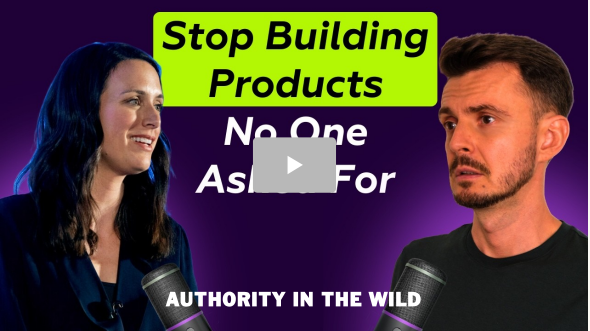
I recently went on the “Authority in the Wild” podcast, and building credibility as an early stage startup was a major theme. Here are four practical ways founders can signal trust to convert their first customers.
Get all the tips on the podcast or YouTube episode.
Here are four practical ways to build social proof at the earliest stages of your startup.
1) Get quotes from design partners
Your first users can become powerful advocates when they help co-create your product. If you’re offering them your product at no or low cost, asking for quotes that you can share publicly is a fair trade.
- Find willing design partners: Offer product access in exchange for feedback
- Capture what they love: Use their quotes and exact words to describe your product
- Turn feedback into proof: Create testimonials or mini case studies to share
Even a few quotes and logos can give prospects confidence to buy so you can close your first deals.
From the podcast:
“One of the most important and easiest first ways to get social proof is for design partners to agree that they are going to give feedback that you can make public.”

2) Build trust via advisors
Third-party validation from advisors, influencers, or established authorities in your field can amplify trust, even before you have brand awareness.
- Pick credible advisors: Choose people your buyers respect or see as peers
- Connect advisors with prospects: Involve them in sales calls and technical discussions
- Highlight their endorsement: Share their quotes and showcase that they’re part of your team
The right endorsements can close the trust gap and fast-track buying decisions.
From the podcast:
“Some founders are bringing in advisors who are peers to the people they’re selling to, like a VP of a people team or a head of engineering.
This can be really helpful in the sales process because this advisor can say, ‘This is the exact type of product I would’ve adopted in my role.’
That peer validation makes prospects think, okay, if they’ve vetted this and they believe it’s a great product, then it gives me more confidence.”
3) Establish authority through founder-led content
Your executive platform is a strong signal of expertise. Thoughtful content positions founders as authoritative voices in their space.
- Publish insight-driven content: Post articles, videos, or talks on your domain
- Educate, don’t just promote: Focus on category problems, solutions, and evaluation
- Build a body of work: Publish consistently, which opens doors to media and speaking
Even a few high-quality, intentional pieces (what I call a “content capsule”) can help prospects feel more confident about buying from a trusted expert.
From the podcast:
“It doesn’t mean the founder has to put their own personal views out there, but there needs to be content related to what they’re building and the company.
Having a body of content that serves a purpose in the sales process can be very helpful.
That is also the type of content you can splice up and post on LinkedIn to establish credibility and create a presence.”
4) Land earned media for third-party validation
Earned media is one of the fastest ways to signal legitimacy and reach your ideal buyers. Press and media position your startup as credible and “one to watch.”
- Guest on relevant podcasts: Share episodes on your website, LinkedIn, and in emails
- Contribute to newsletters & communities: Publish and participate in channels that reach your ideal audience
- Get quoted in trusted publications: Offer expert commentary in media your buyers respect
Media mentions accelerate awareness and can also generate demo requests. Focus on appearing in media that your audience already follows and respects.
From the podcast:
“Getting those early wins, guesting on podcasts, getting early press, finding other influencers or authorities who write newsletters or Substacks…
When you can contribute content or appear in that media, that’s another form of early social proof that can give you traction in third-party validation.
All of these proof points help a prospect feel more confident that you can deliver the results you promise.”
The Takeaway
You can earn social proof and credibility even before you have dozens of customers. Start with design partners, tap advisors, position yourself as a thought leader, and earn media validation.
Even at the earliest stages, these steps create a foundation that makes every sales conversation, demo, and investor pitch more likely to close.